AI for mathematics
Open problems, settled and checked
42 papers and notes on open problems, done with AI under my direction. None has been peer reviewed yet; each is a preprint, and the papers, code and proofs are all in the public repository jvvk/mathematics.
I am aware of the limits of autoformalisation by language models: a Lean proof checks the statement as it was formalised, and a formalisation written with a model can say something subtly different from the paper. What gives me confidence that the results hold is the rest of the evidence: independent computational checks, and the replication of results already established in the literature.
Open problems settled, formally verified
Each result checked end to end in Lean 4.
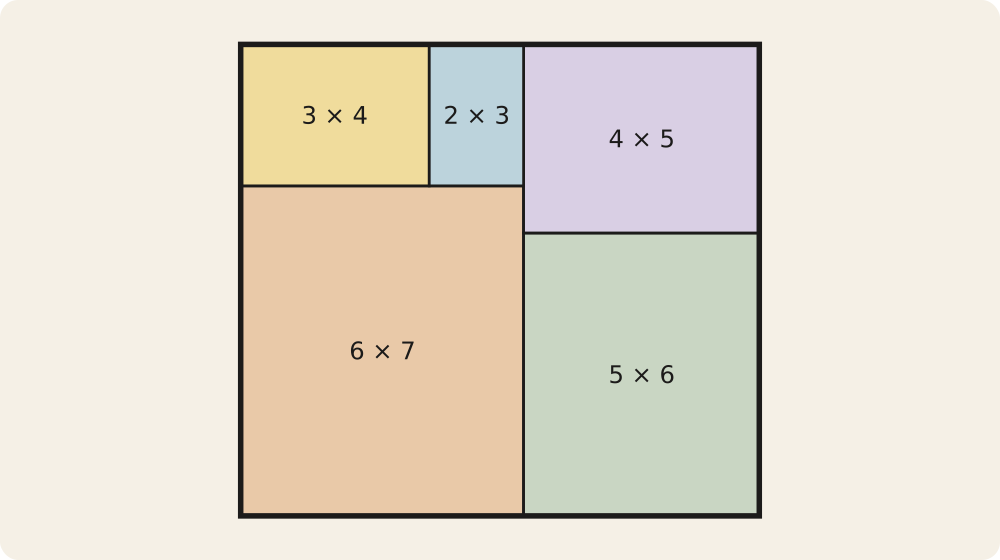
Almost-squares in almost-squares
Which k × (k+1) rectangles split into smaller distinct ones: exactly 4, 10, 12, 14, 15, 18 and every k ≥ 20. Friedman's conjecture.
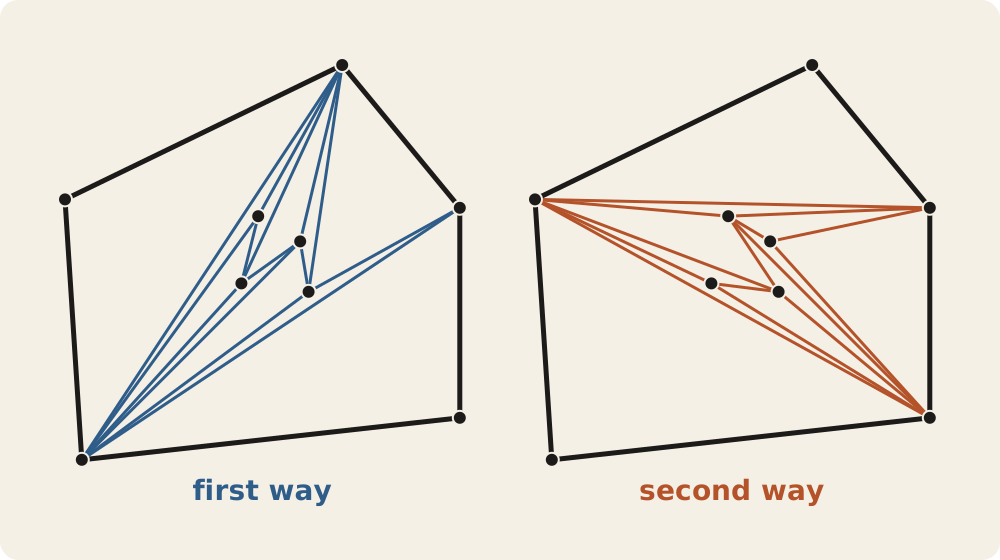
Two triangulations, one outline
From nine points on, two triangulations can share nothing but the five outline edges, answering Rote.
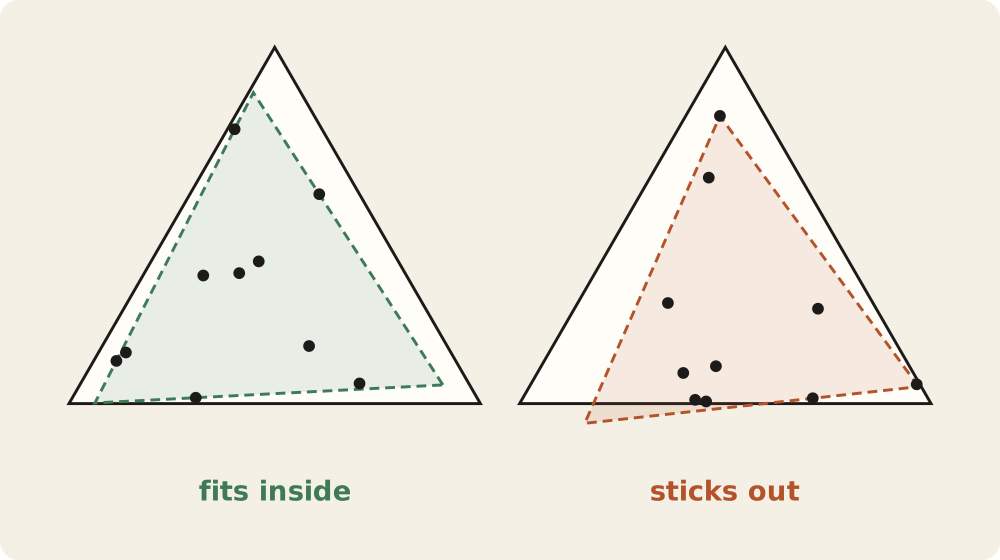
Does the smallest copy fit?
For many random points in an equilateral triangle, the smallest enclosing copy fits inside with probability tending to 13/48, not 1/2.
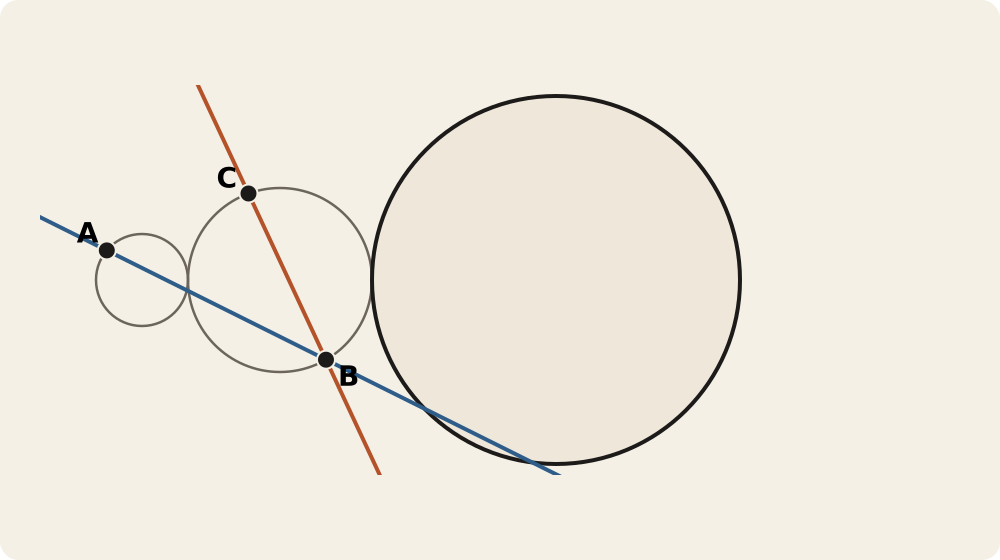
Random lines past three circles
Lines AB and BC hit the third circle equally often, for every ratio of radii in geometric progression.
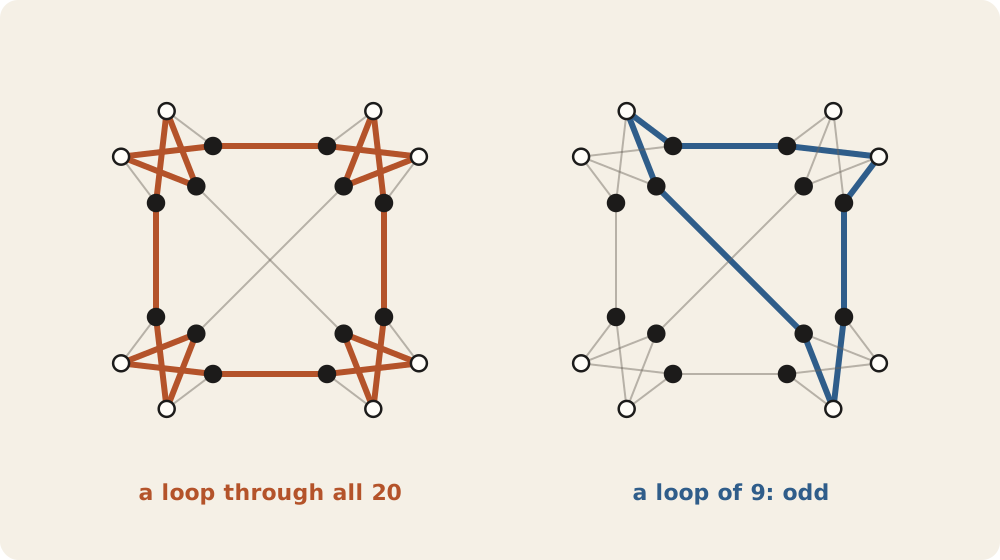
A cubic graph with no (n−1)-cycle
Hamiltonian, not bipartite, and no cycle of length 19: an answer to Gordon Royle's question.
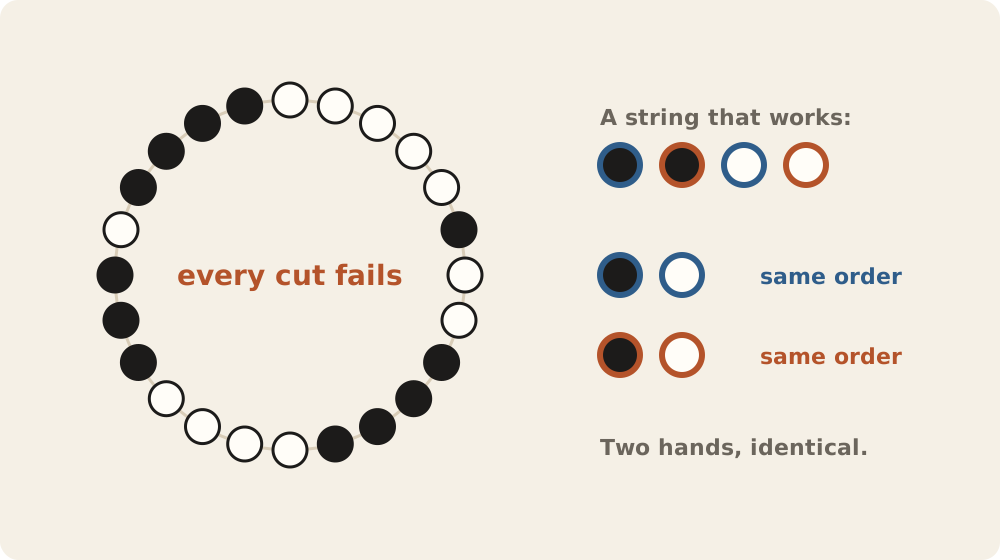
Necklaces no cut can split
Shuffle anti-squares exist in every even length from 24, as Grytczuk, Pawlik and Pleszczyński conjectured.
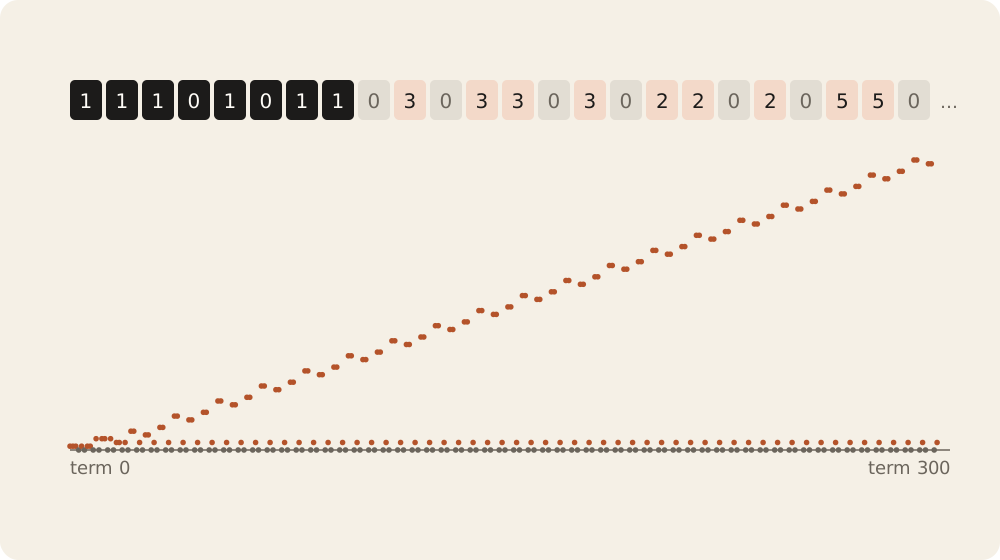
A mex sequence that never repeats
Guy's question E27: the sequence from 1,1,1,0,1,0,1,1 is unbounded, so not ultimately periodic.
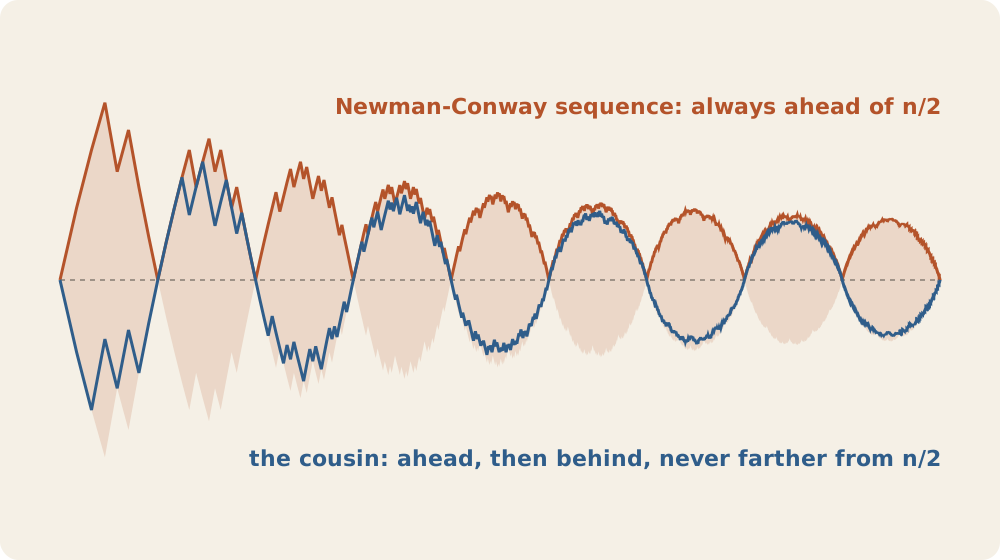
Newman-Conway and its cousin
Alkan's alternating variant never strays further from n/2 than the Newman-Conway sequence.
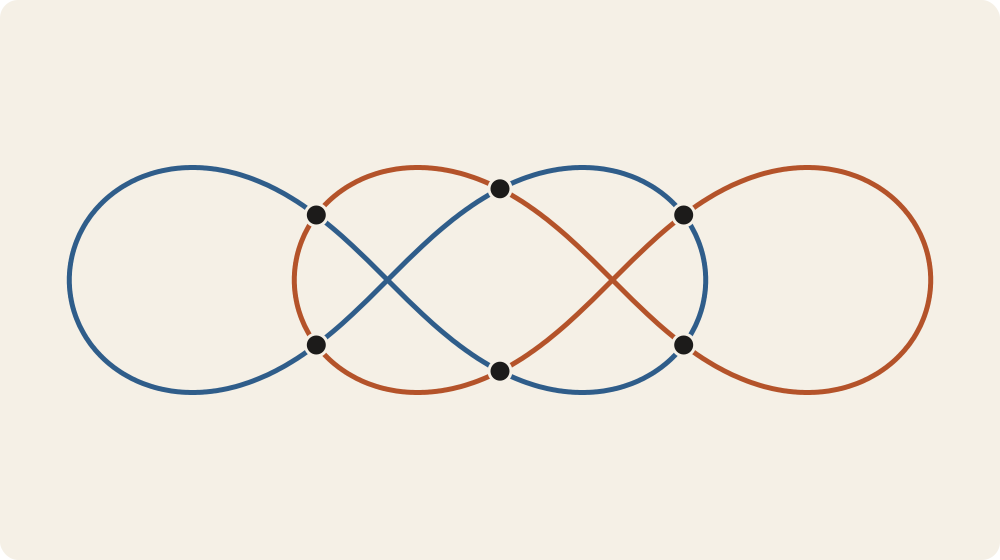
Two figures of eight
Polynomial lemniscates meet in at most 2n₁n₂ − 2 points; two lemniscates of Bernoulli in at most six.
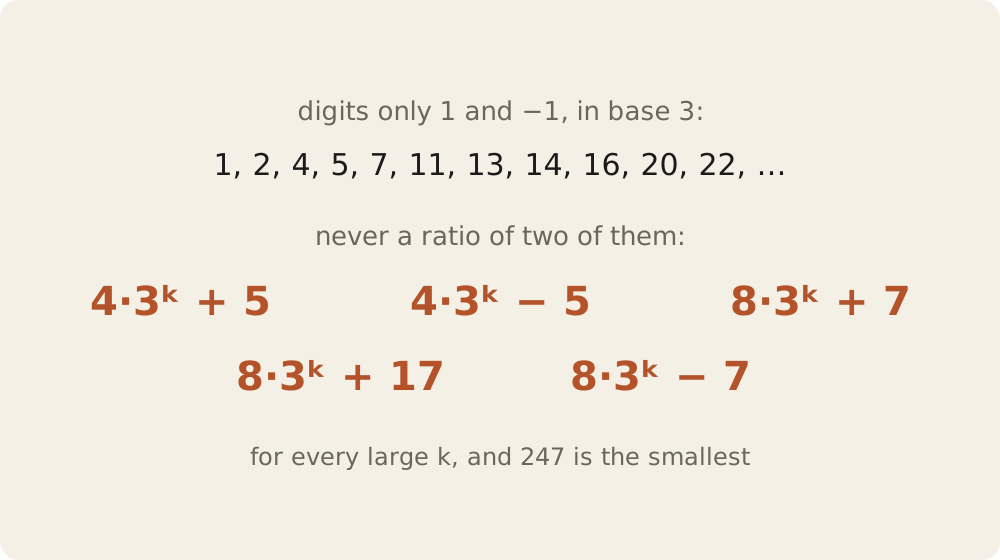
Quotients of balanced ternary numbers
Guy's question F31: infinitely many integers are not a ratio of two numbers whose balanced-ternary digits are all 1 or −1.
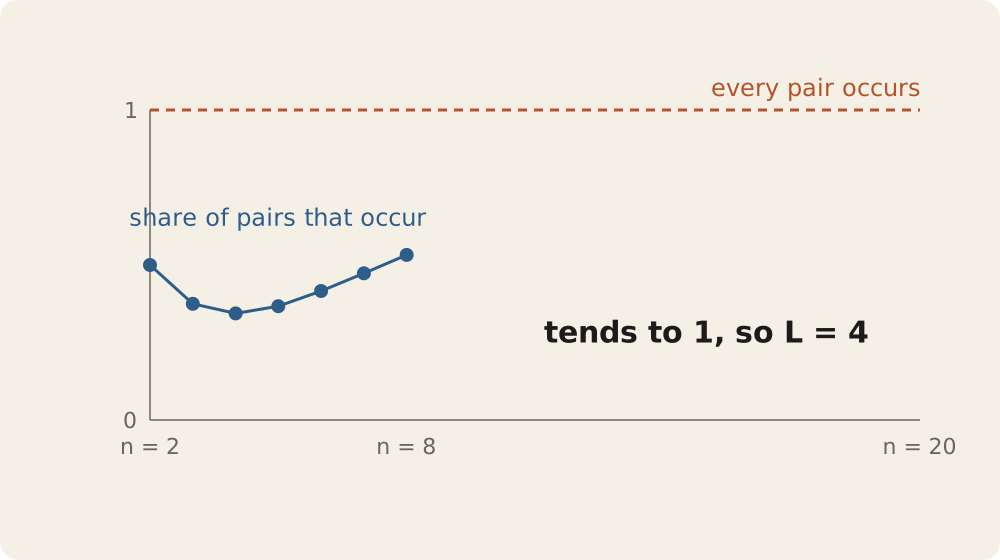
Descent sets of a permutation and its inverse
Almost every pair of subsets occurs, so Stanley's growth rate is L = 4.
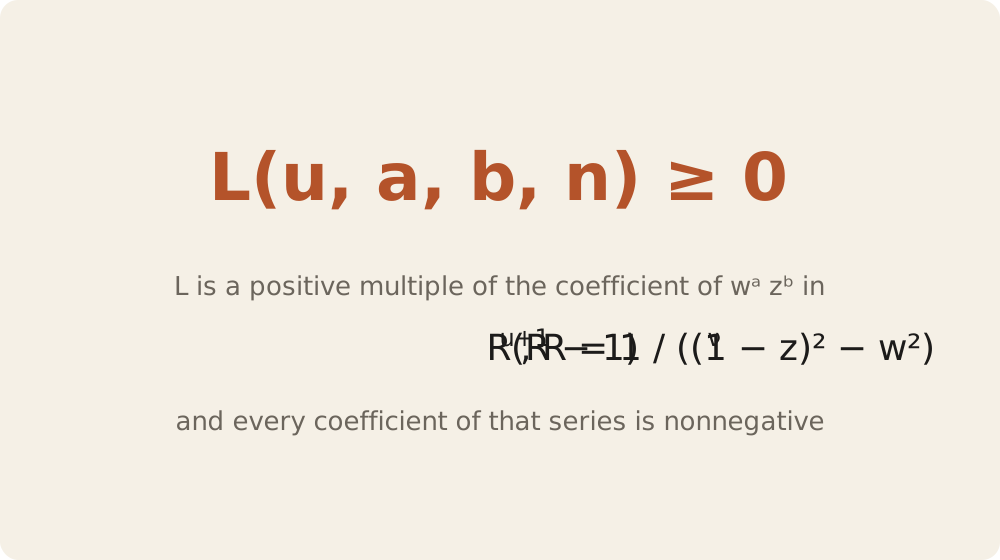
An alternating sum that is never negative
Abdesselam's sum L(u,a,b,n) is nonnegative, and Taylor's and Hucht's conjectures follow.
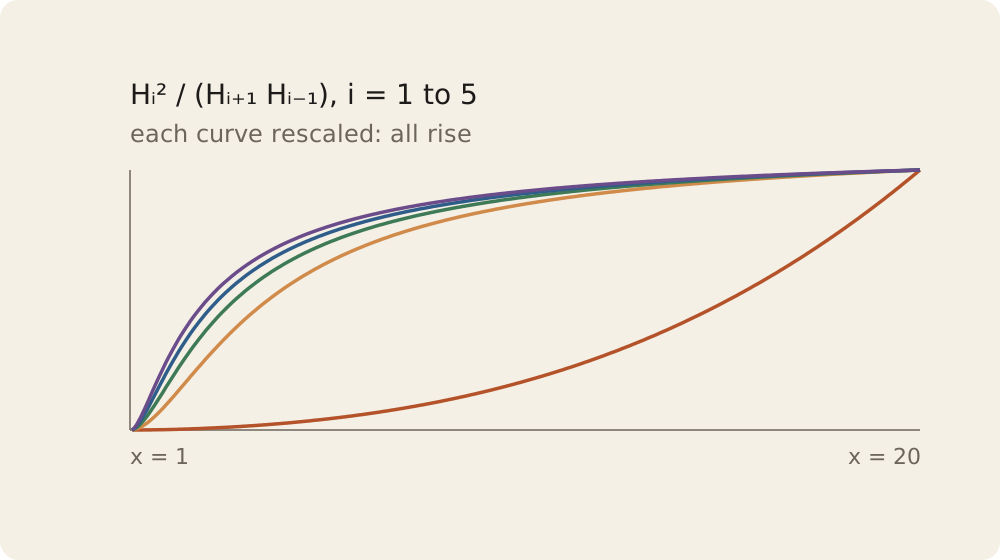
A ratio of symmetric polynomials
Ait-Haddou's ratio of complete homogeneous symmetric polynomials increases, for every degree and position.
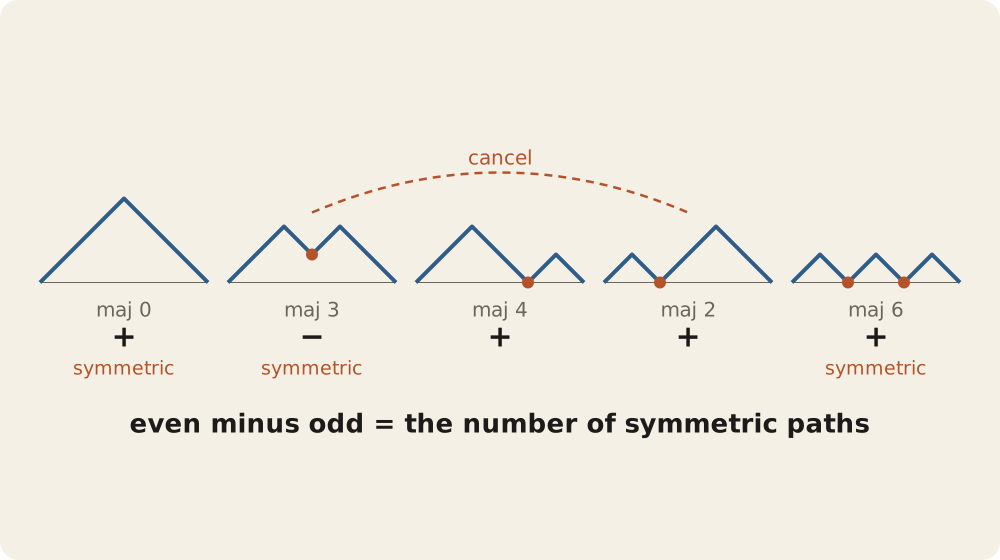
Even and odd Dyck paths
Weight a Dyck path by its valley positions: even minus odd is the number of symmetric paths. Cigler's question, a combinatorial proof.
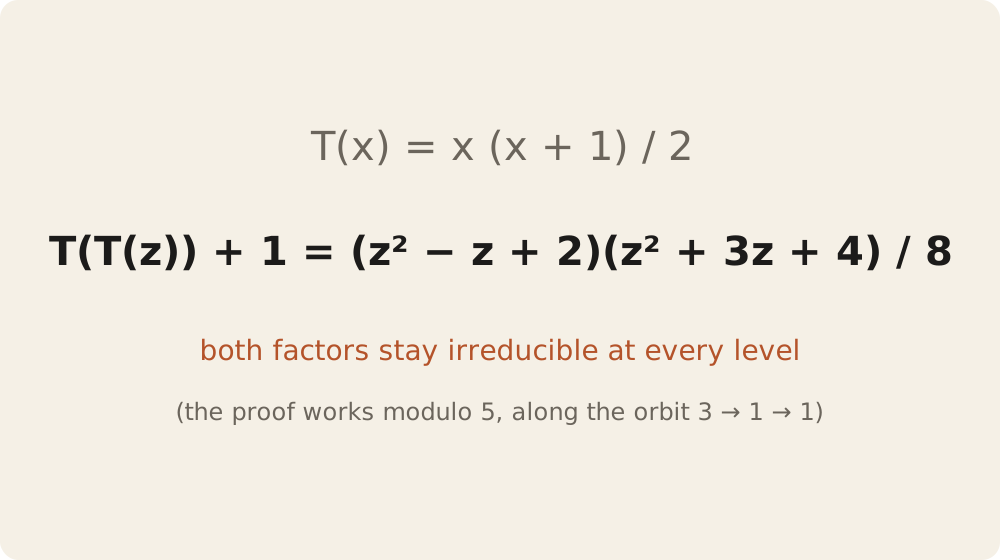
Counting cycles in a Sylow 2-subgroup
The two factors Stanley observed are irreducible over the rationals at every level.
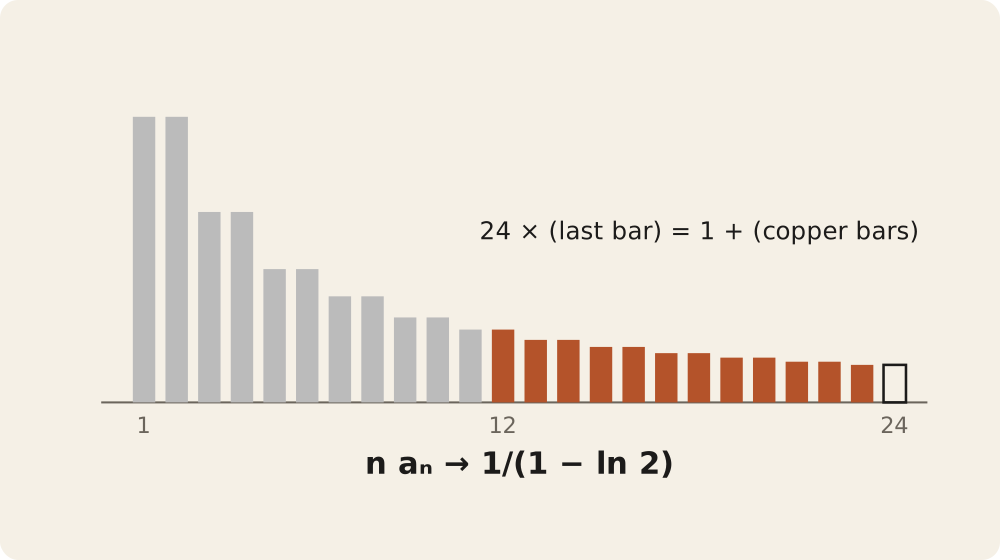
A sequence that looks back half way
If a(n) drops by a(⌊n/2⌋)/n at each odd step, then n a(n) tends to 1/(1 − ln 2), as a commenter guessed from the digits.
Open problems settled, verified by computation
Exhaustive searches and computer certificates.
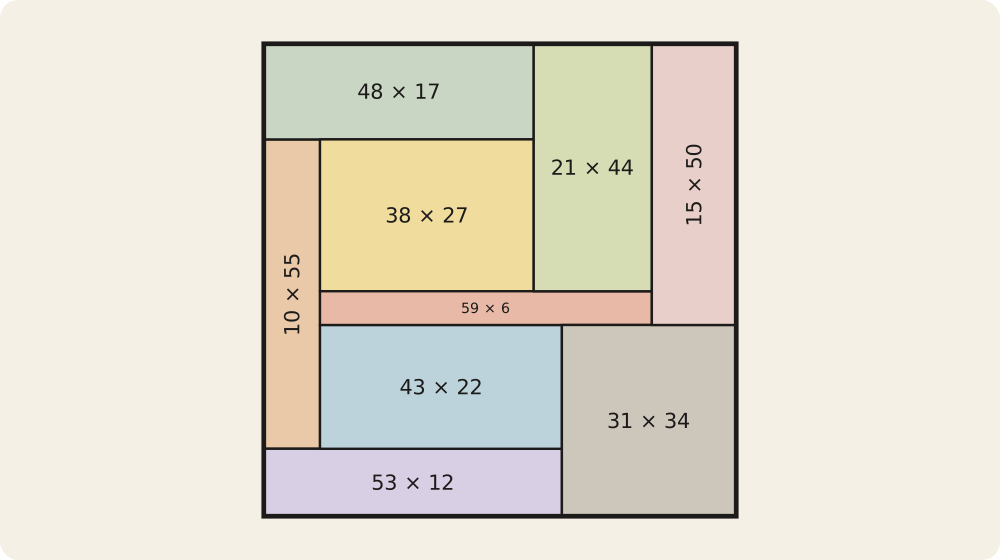
Equal perimeters, no two alike
A square splits into nine rectangles of equal perimeter, no two congruent; nine is the fewest, with exactly five solutions.
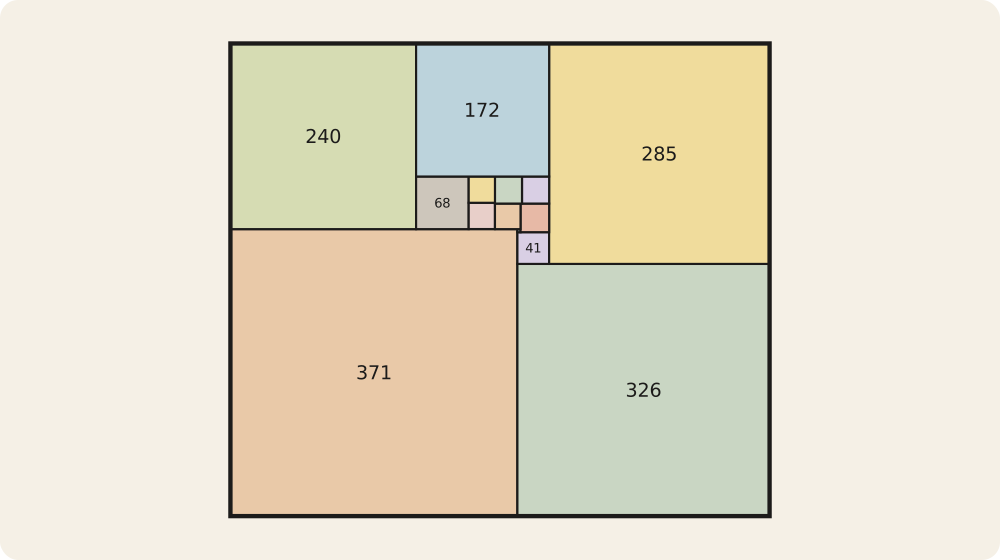
697 × 611 in fourteen squares
The rectangle needs exactly fourteen squares, not seventeen, so it is not a counterexample to the minimal squaring conjecture.
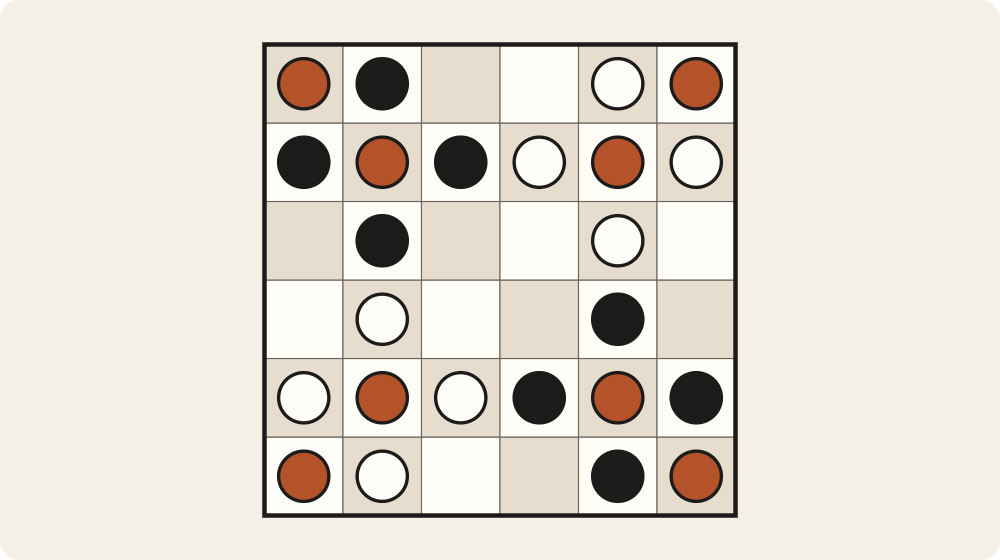
Seven problems from Erich Friedman's *Math Magic*
Three armies of five bishops fit on a 5 × 5 board and three of eight on 6 × 6, and no more: Friedman's two values.
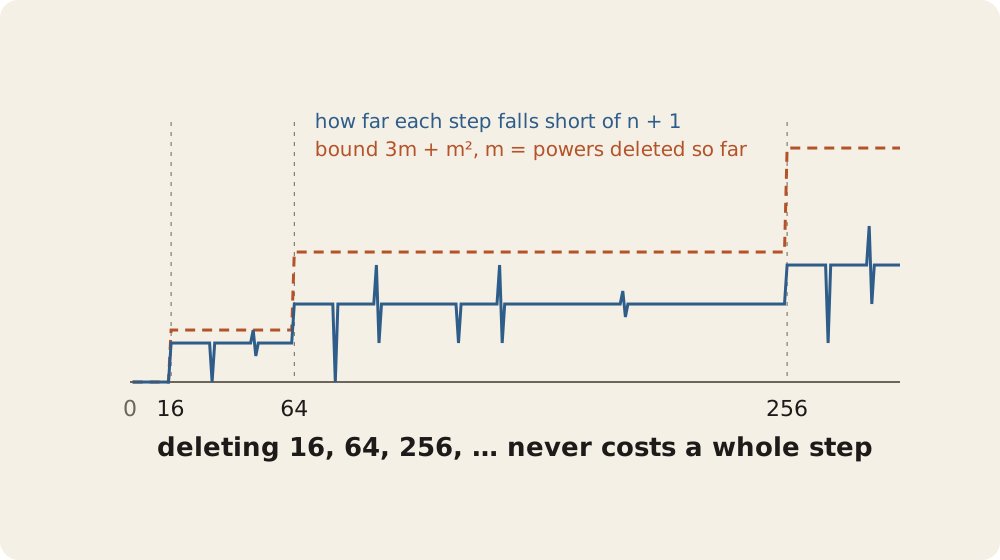
Deleting the powers of four
Remove 16, 64, 256, … and the ordered ways to write n as a sum of three survivors still rise at every n: Sándor and Yang's Remark 1.3.
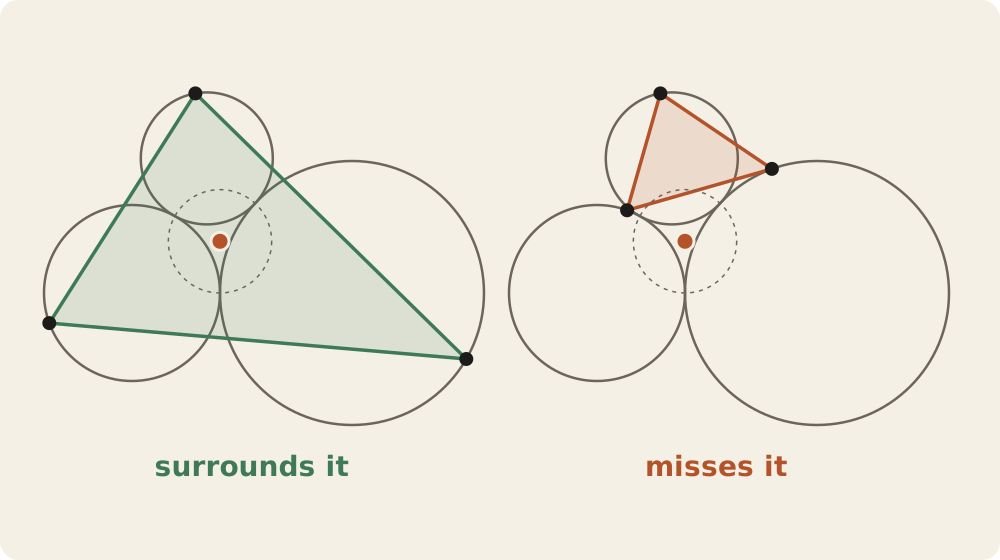
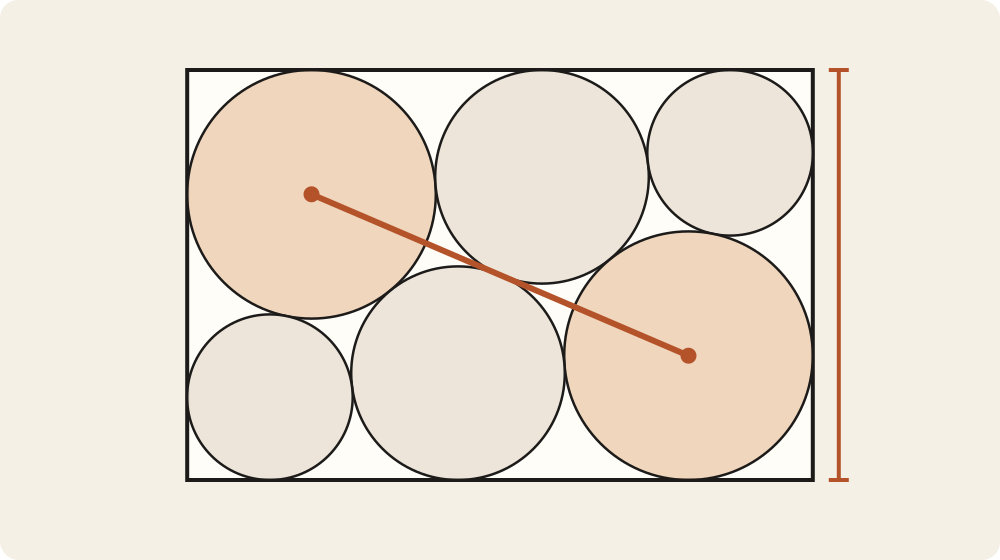
Three circles and a fair coin
A triangle through random points on three touching circles contains the incentre with probability exactly 1/2, for all radii.
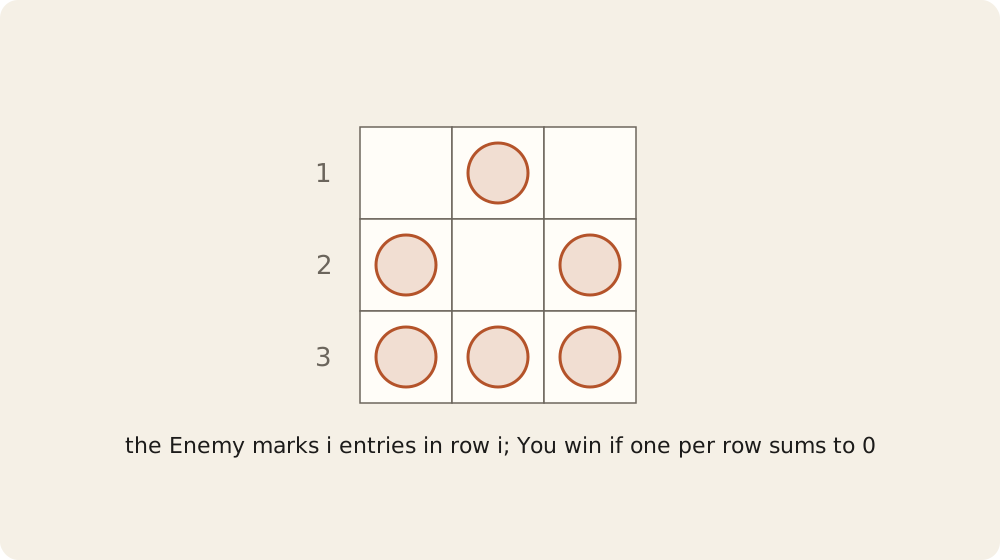
A zero-sum selection game
Lev's question: the winning matrices form a union of subspaces of dimension n(n+1)/2 − 1, and recognising them is Π₂ᵖ-complete.
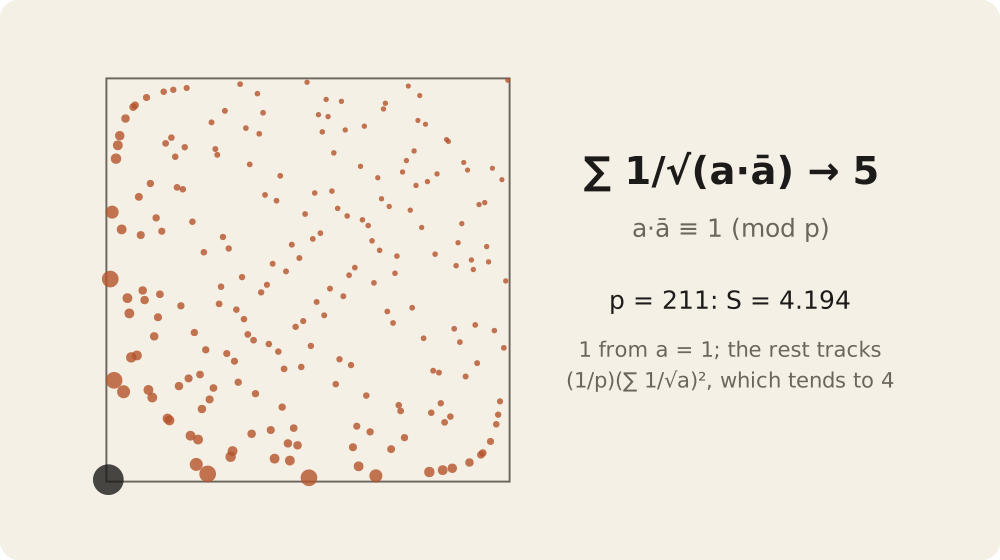
Five from inverse pairs
Summing 1/√(a·ā) over a and its inverse mod p gives 5 + O(p^(−1/8+ε)): the inverse pairs behave like all pairs, and those sum to (∑ 1/√a)²/p → 4.
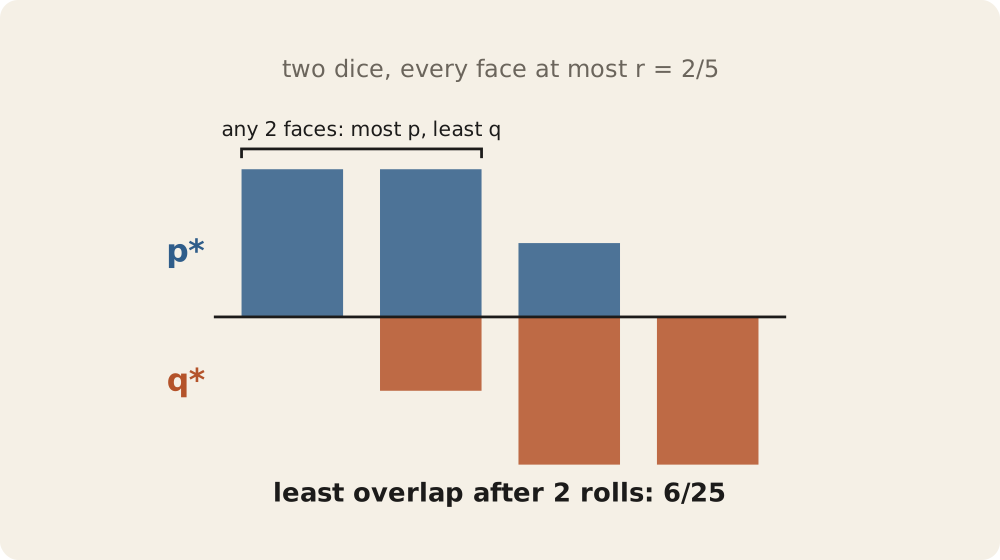
The easiest dice to tell apart
Among loaded dice whose faces are capped at probability r, a staircase against its own reversal is the easiest pair to tell apart, for any number of faces and rolls; this answers an open Math.SE question with its equality cases.
Partial progress
Bounds, special cases and constructions that narrow an open question.
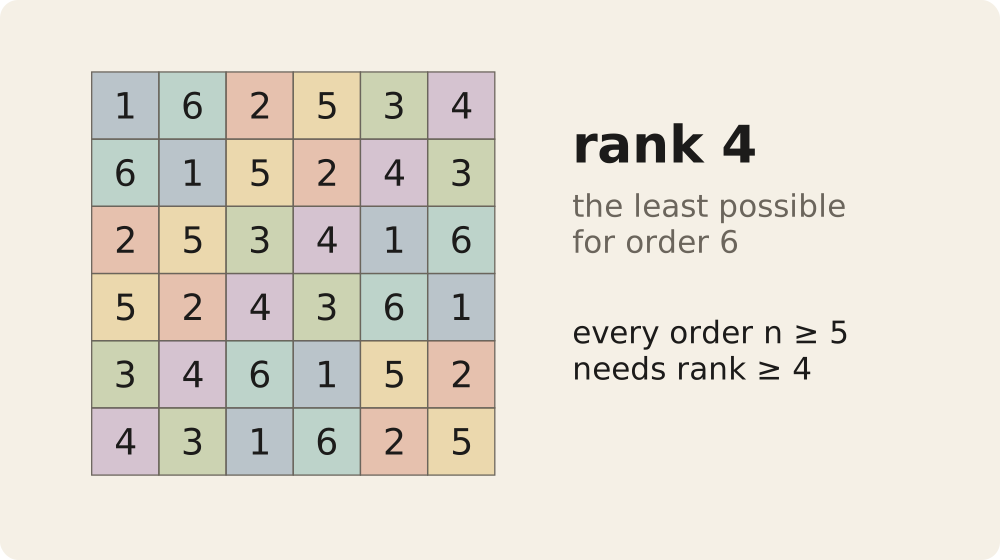
Latin squares of small rank
Every Latin square of order n has rank at least 1 + 3(n−1)/(n+1), so at least 4 from n = 5 on; the least ranks up to order 8 are 1, 2, 3, 3, 5, 4, 6, 4.
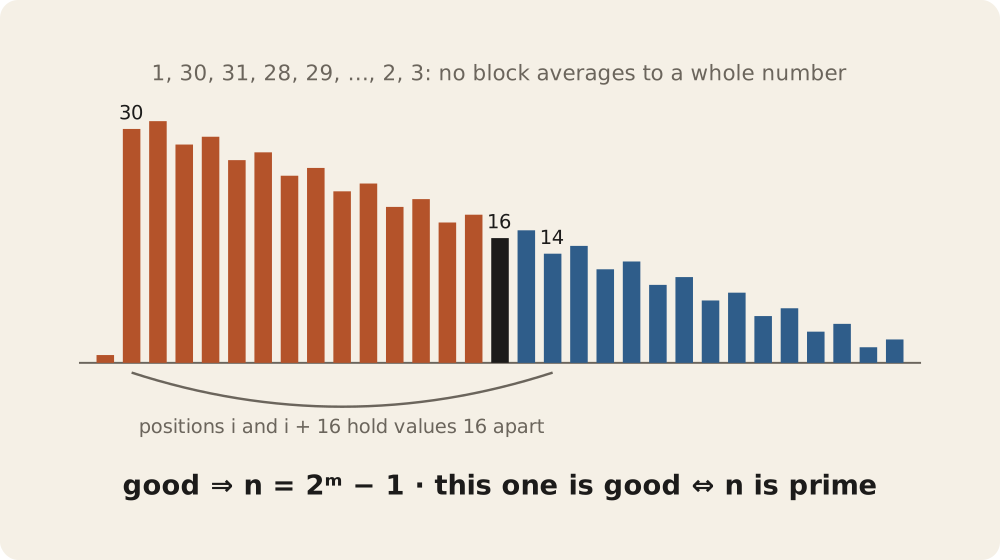
Permutations with no whole-number averages
If no proper block of a permutation of 1..n averages to a whole number, then n = 2ᵐ − 1; the asker's example works exactly when n is prime, and n = 15, 63 have none.
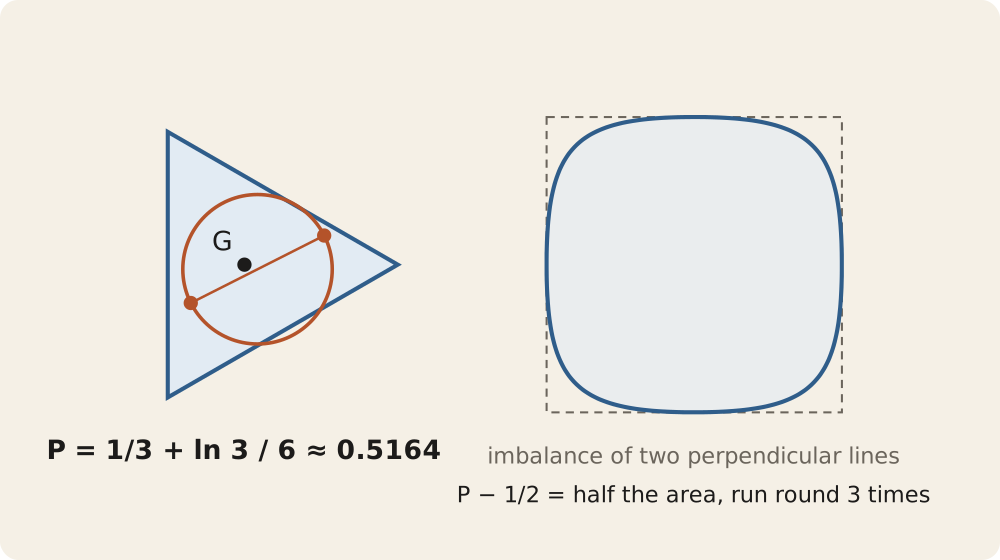
Catching the centroid
A circle on a random diameter of a convex region contains the centroid with probability at most 14/27 ≈ 0.5185; the equilateral triangle's 0.5164 is conjectured best.
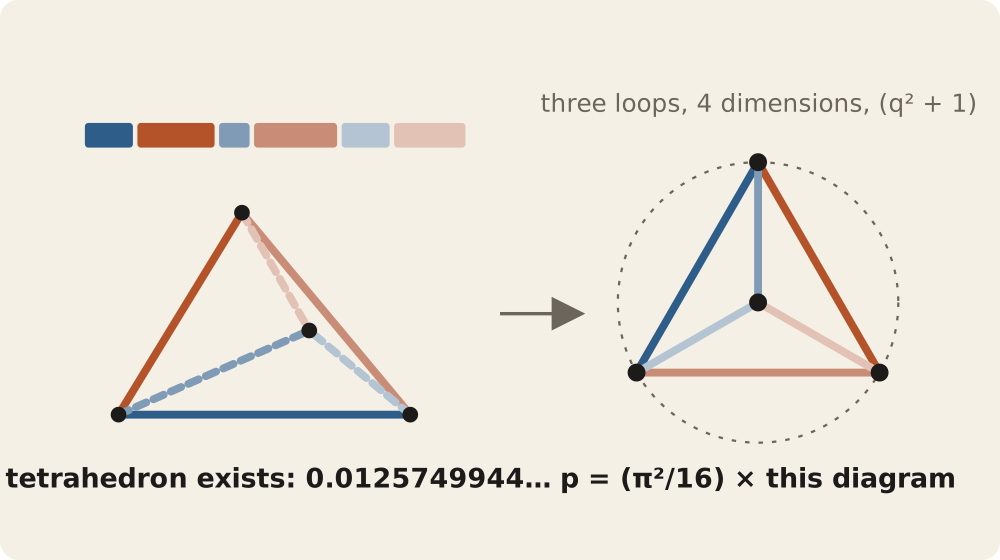
A broken stick and a Feynman diagram
The chance that six random pieces of a stick make a tetrahedron is a three-loop Feynman diagram; it is 0.0125749944…, not 1/79.
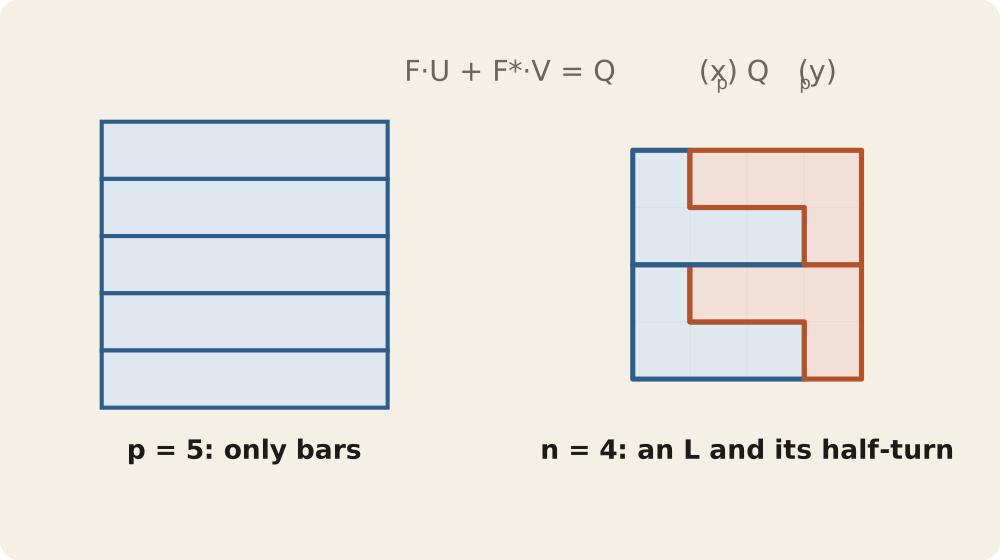
Prime squares and half-turns
A p × p square, p prime, cut into p congruent pieces that are only translated or half-turned must be cut into bars; with quarter-turns too, the question is open.
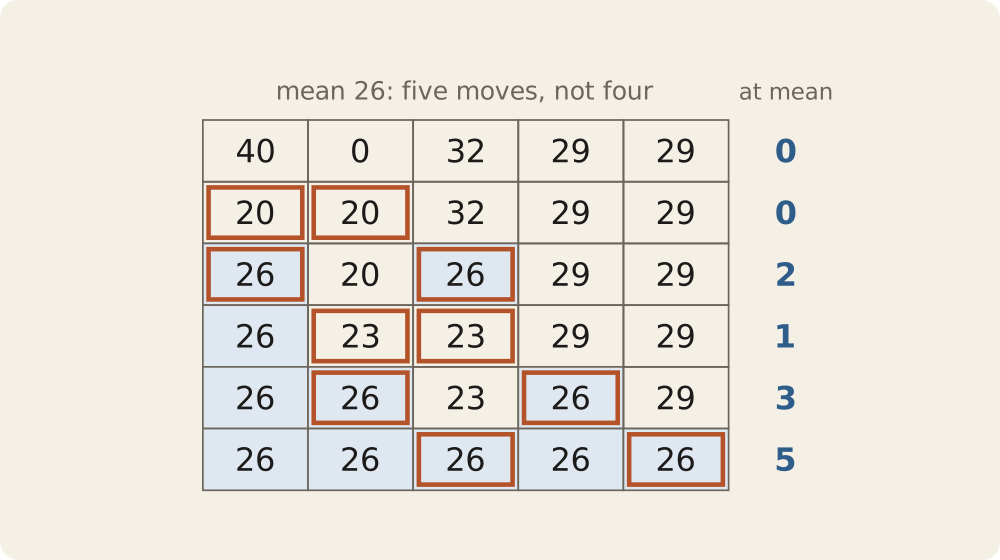
Five numbers, many averages
Replacing two numbers by their average, the five integers (5N, 0, 4N, 3N±5, 3N±5) with N = 2ᵏ⁺¹ need exactly k + 3 moves to become equal, so five numbers have no bound on the shortest solution.
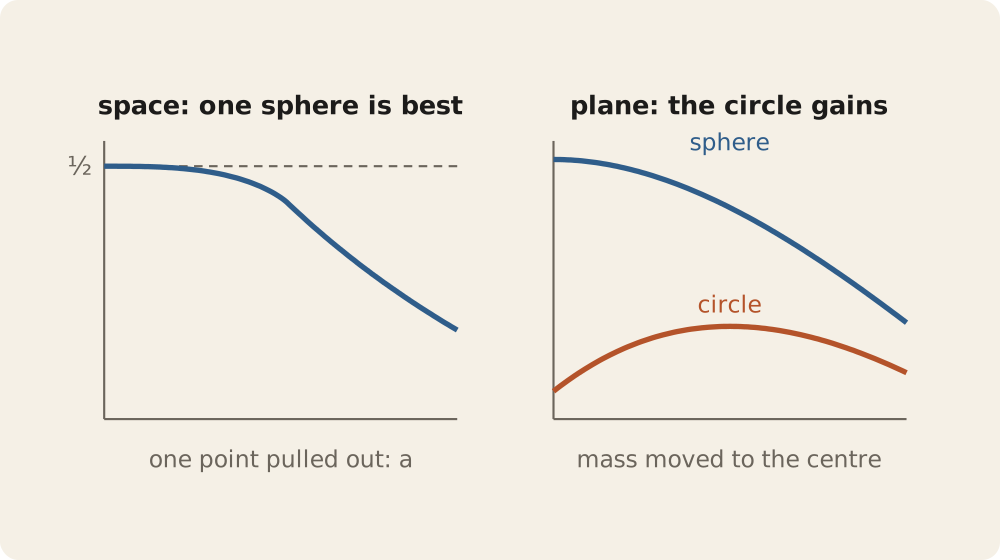
Why the sphere beats the ball
Three points on concentric spheres form an acute triangle with probability at most 1/2, equal only when the two outer radii agree; so the uniform sphere beats every rotationally invariant law in space, while in the plane moving mass inwards helps.
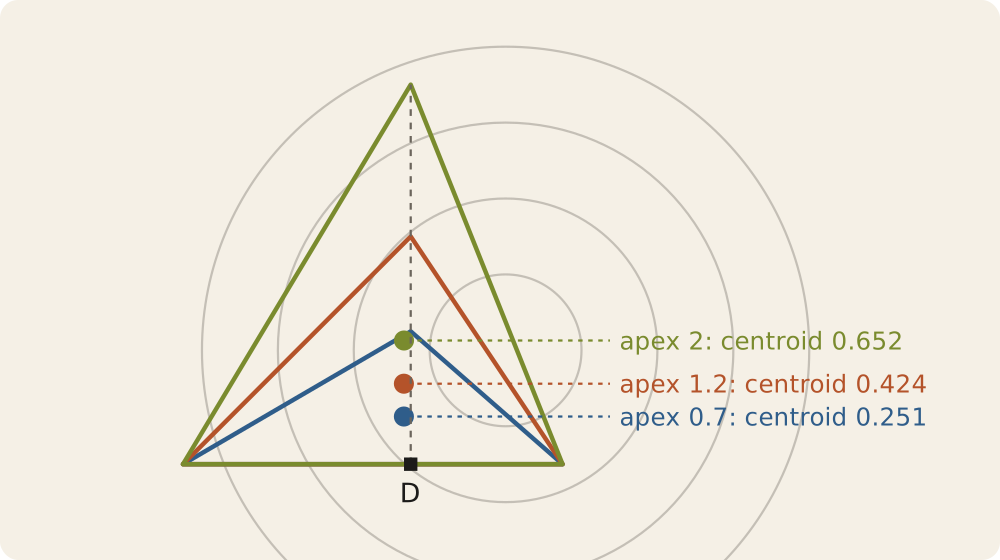
Raising the apex raises the Gaussian centroid
Raise a triangle's apex along the perpendicular through a point of its base and the Gaussian centre of mass rises, in every dimension and wherever the Gaussian is centred; whether it always pins down the moving vertex is open.
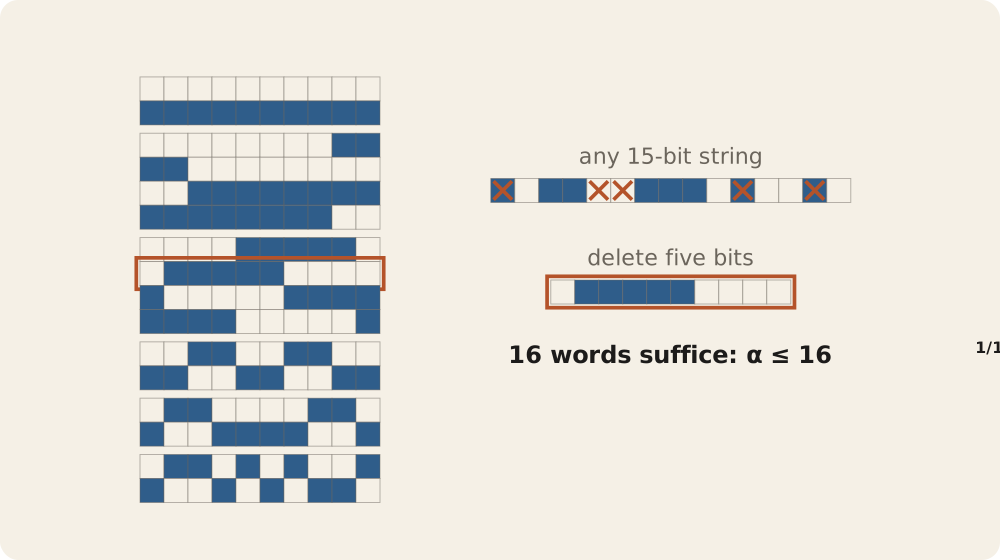
Sixteen words cover all 15-bit strings
Deleting five bits from every 15-bit string can leave just 16 different strings, down from 17 in 2013, so the growth rate of the n/3-deletion problem is at most 16^(1/15) < 1.2031; among symmetric sets 16 is optimal.
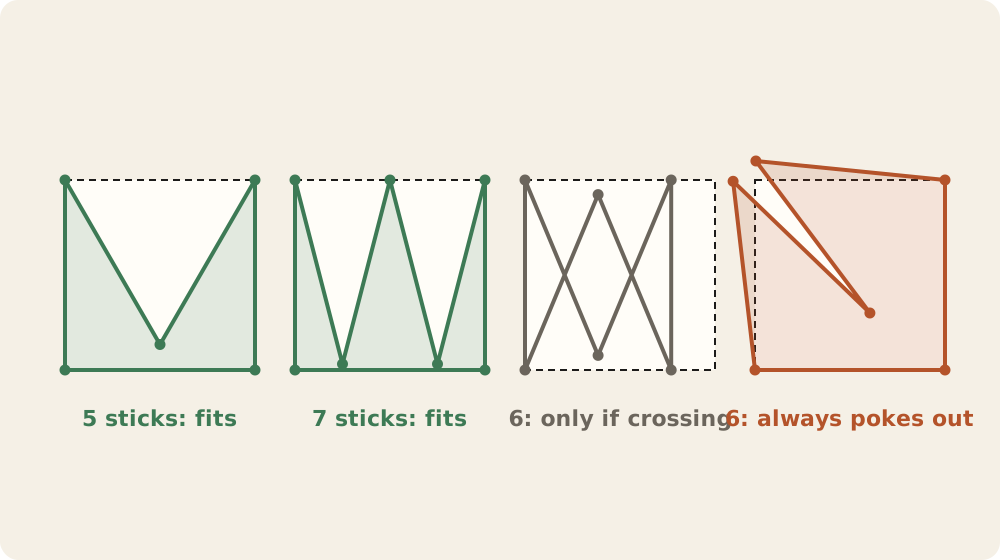
Six matchsticks in a square
No simple loop of six unit sticks fits in a unit square: the six-stick case of an open parity question.
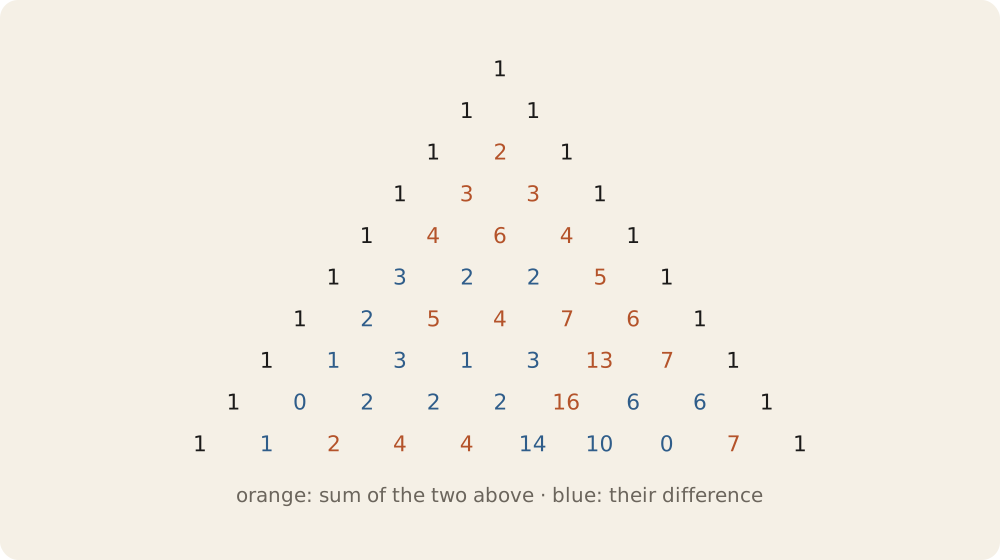
A randomized Pascal triangle
The expected average blows up whenever p ≥ 0.232; whether it does for every p > 0 is open.
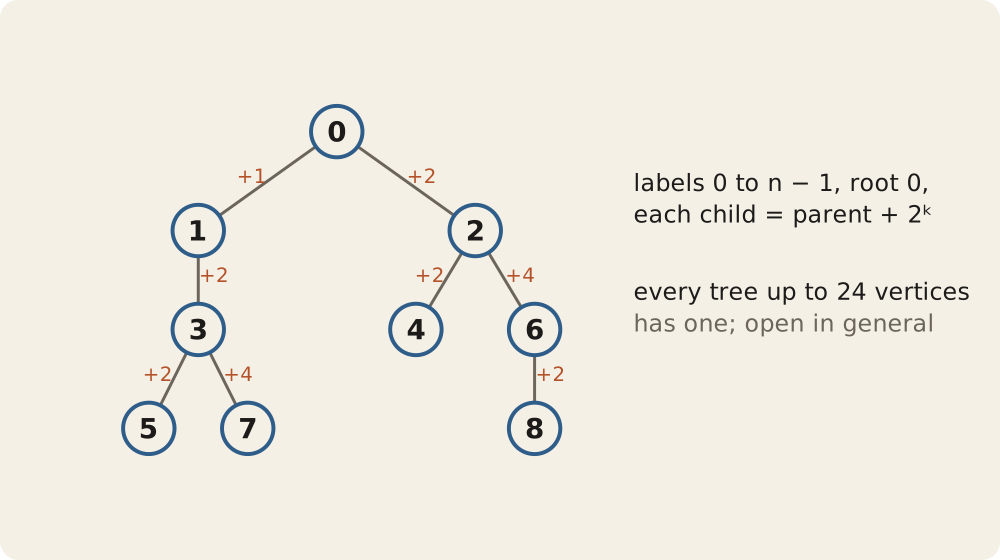
Labelling binary trees by powers of two
Every tree with at most 24 vertices can be labelled 0 to n − 1 with power-of-two steps; five constructions and an exact rule for universal label sets narrow any counterexample.
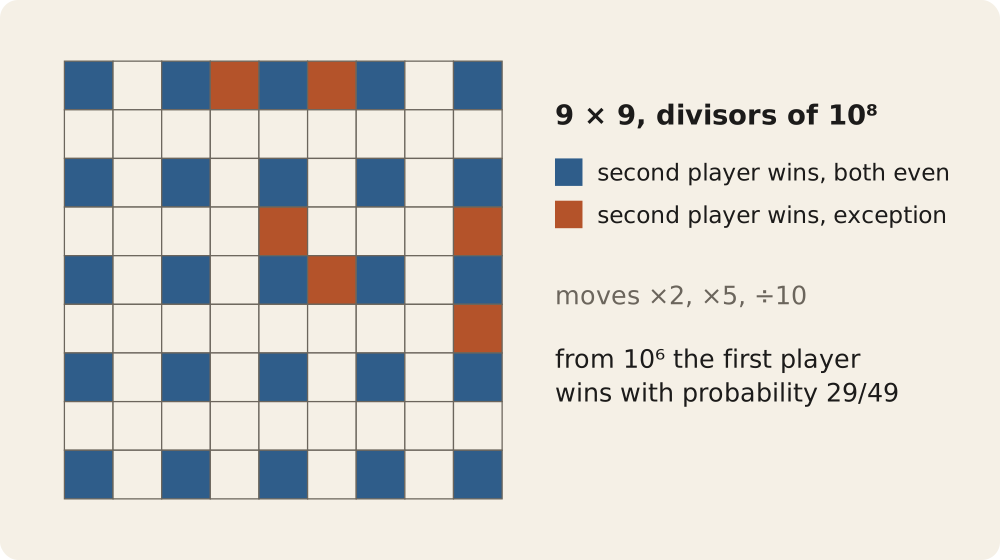
Wandering over the divisors of 10ⁿ
Players multiply by 2 or 5 or divide by 10, never repeating a divisor. The tournament's natural answer fails from 10⁶ on, and the second player beats whole families of openings on every board.
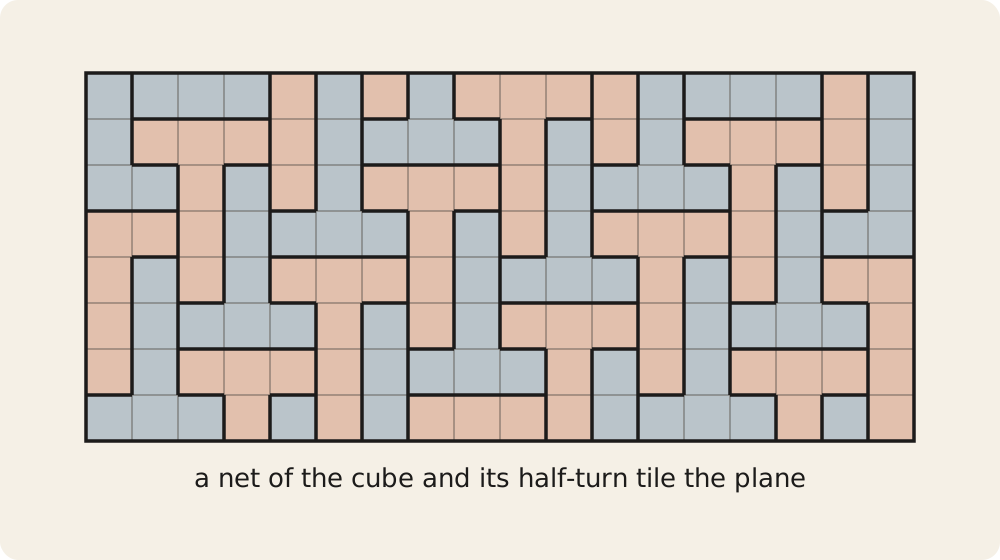
Unfolded cubes that tile space
Every one of the 502,110 unfoldings of the six-dimensional cube tiles five-space with its point reflection, extending Firet's five-cube result.
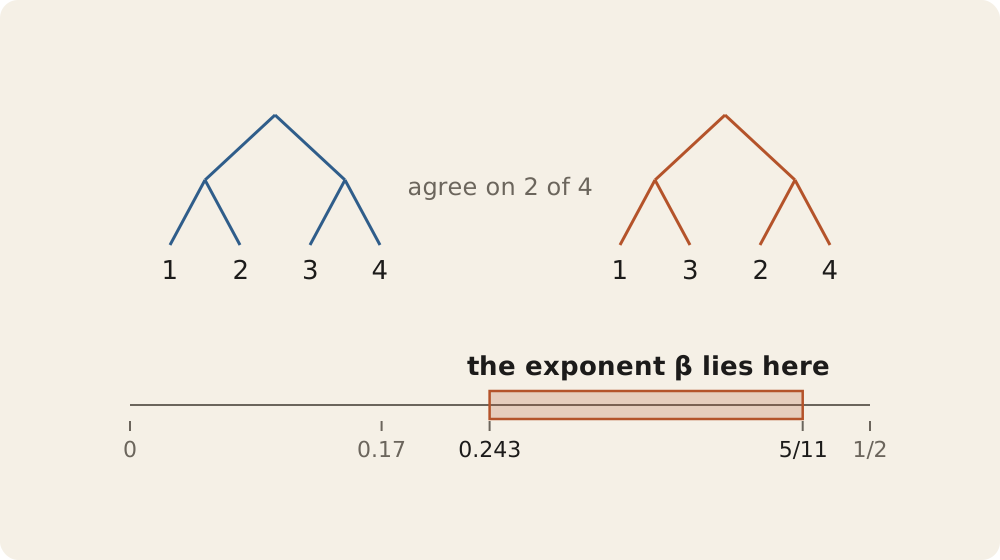
How much two balanced trees must share
Two balanced trees on n leaves always agree on at least n^0.243 leaves, and some on only n^(5/11); Martin and Thatte conjectured n^(1/2).
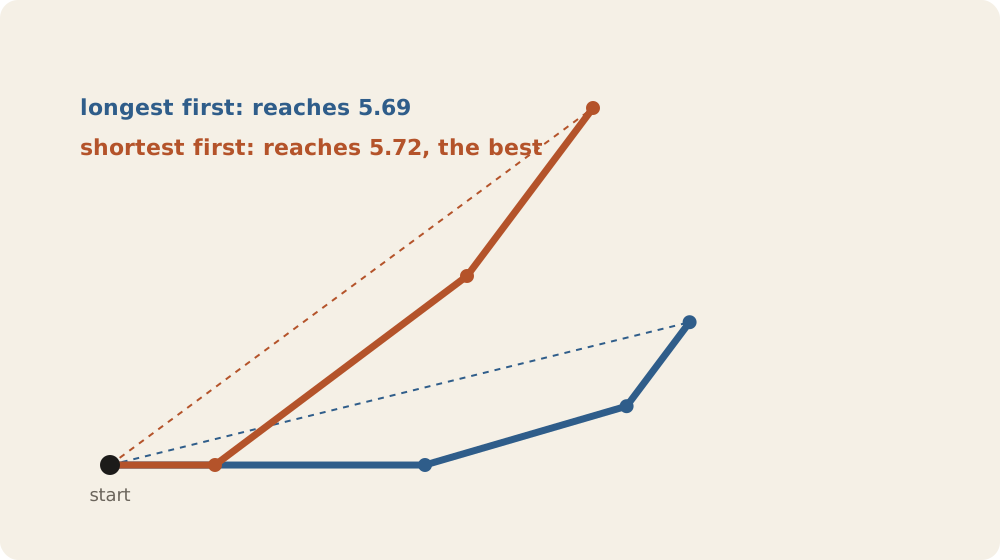
The chain that reaches farthest
Every best chain has lengths rising then falling; exactly three orders occur for four segments, and the general count is open.
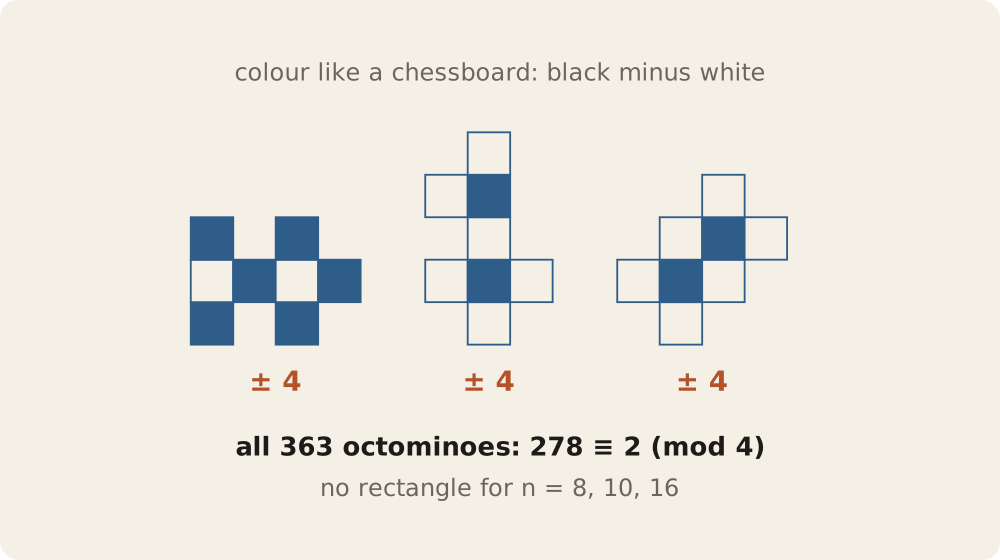
Polyomino rectangles by parity
One copy of every hole-free n-omino tiles no rectangle for n = 8, 10 or 16, because the pieces' checkerboard imbalances add up to 2 mod 4 (for n = 16, over 11,230,003 pieces). Sizes 9 and 11 to 15 stay open.
Separate repository
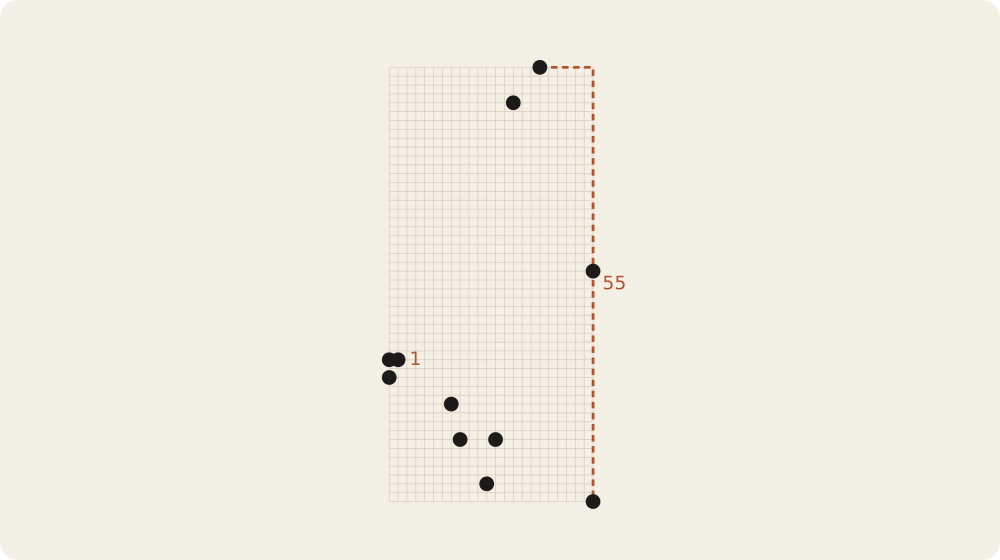
Eleven points, distances 1 to 55
Eleven lattice points whose 55 taxicab distances are exactly 1 to 55: the case n = 11 of an open question.
New proofs of known results
Shorter or more elementary routes to results already known.