Seven problems from Erich Friedman's *Math Magic*
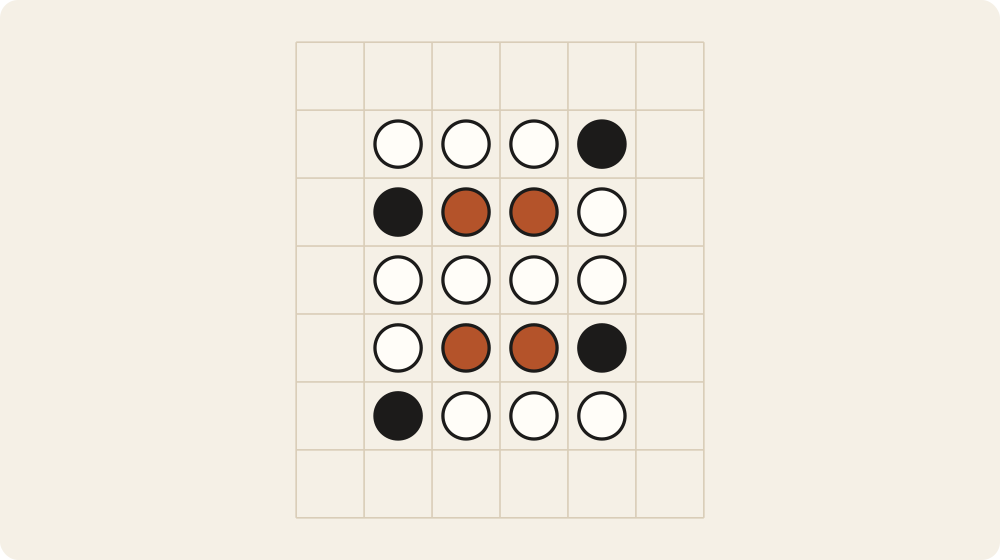
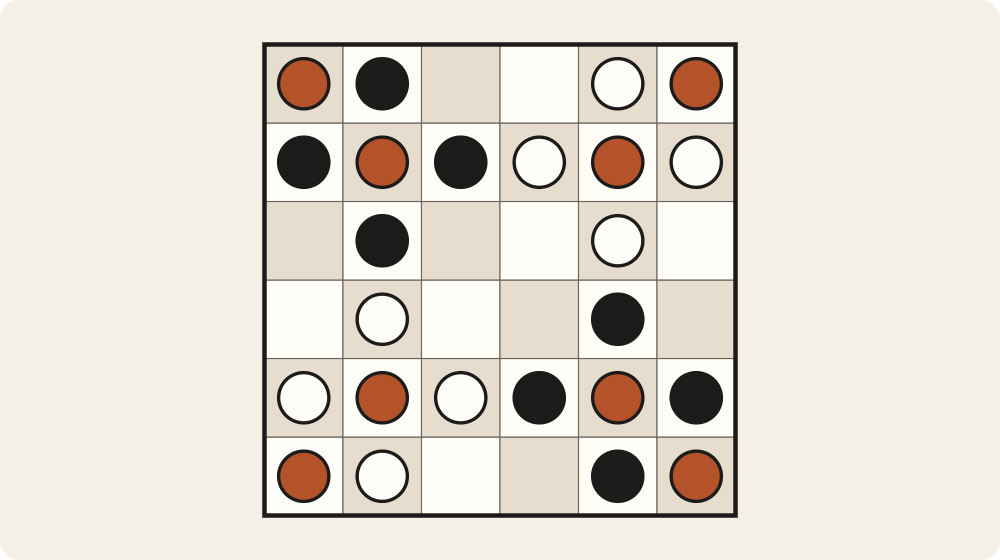
Three armies of five bishops fit on a 5 × 5 board and three of eight on 6 × 6, and no more: Friedman's two values.
Open problem settled, verified by computation
Erich Friedman’s Math Magic poses a problem each month and keeps a list of unsolved problems. As of 9 October 2026 the list shows problems 15, 21 and 24 as open, and the March 2005 page on armies of bishops asks for two exact values. The paper settles these four, and makes progress on problems 6, 28 and 33, which the list also shows as open:
- Armies of bishops.
B(3,5) = 5andB(3,6) = 8: three armies of five bishops fit on a 5 × 5 board and three of eight on a 6 × 6 board, and no more. A placement is valid exactly when every diagonal carries one army, which turns the question into an exhaustive count over labellings of the diagonals. - Touch cycles (unsolved problem 24). No finite arrangement of three colours of king has touch counts
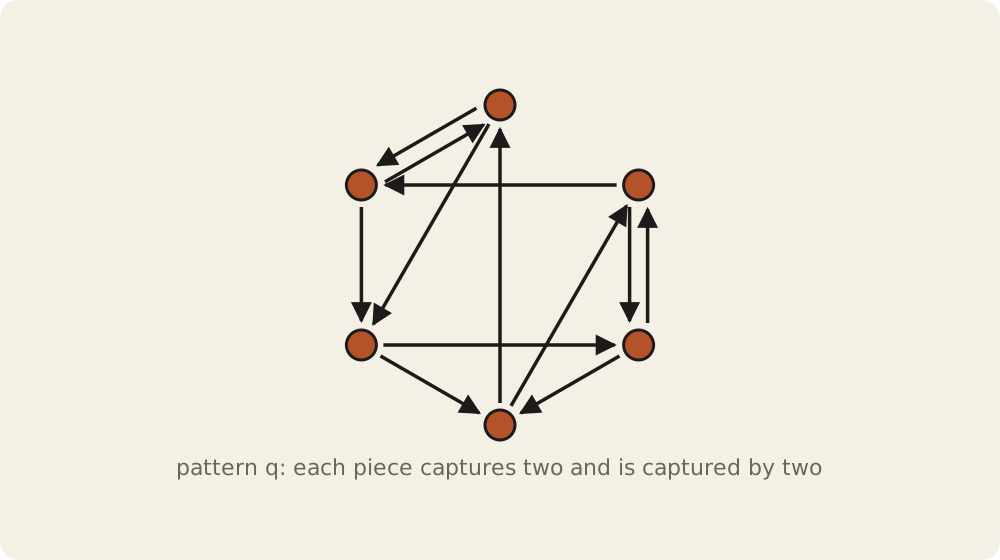
(1,3,6),(1,6,3)or(2,3,4), nor(1,4,5). An extreme king reduces any finite arrangement to a finite formula, refuted with a DRUP certificate. Each listed triple does have a periodic arrangement of the whole plane, so finiteness is essential. - Capture digraphs (unsolved problem 21). The 2-regular digraphs
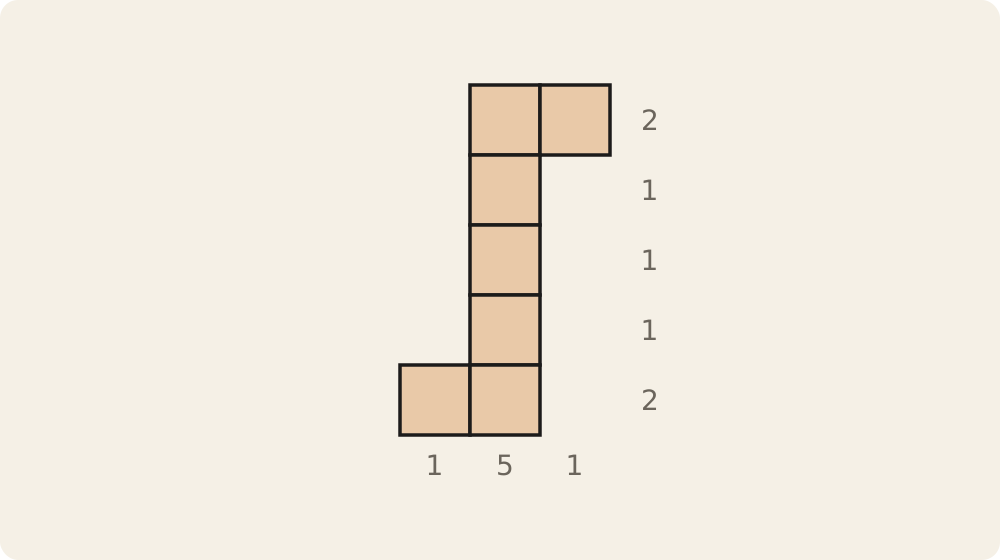
q,randson six points are not the capture graph of any chess position on any board. - Magic polyomino squares (unsolved problem 15). The first listed heptomino can never be arranged in a square with equal row and column counts. The proof is an explicit weighting of rows and columns.
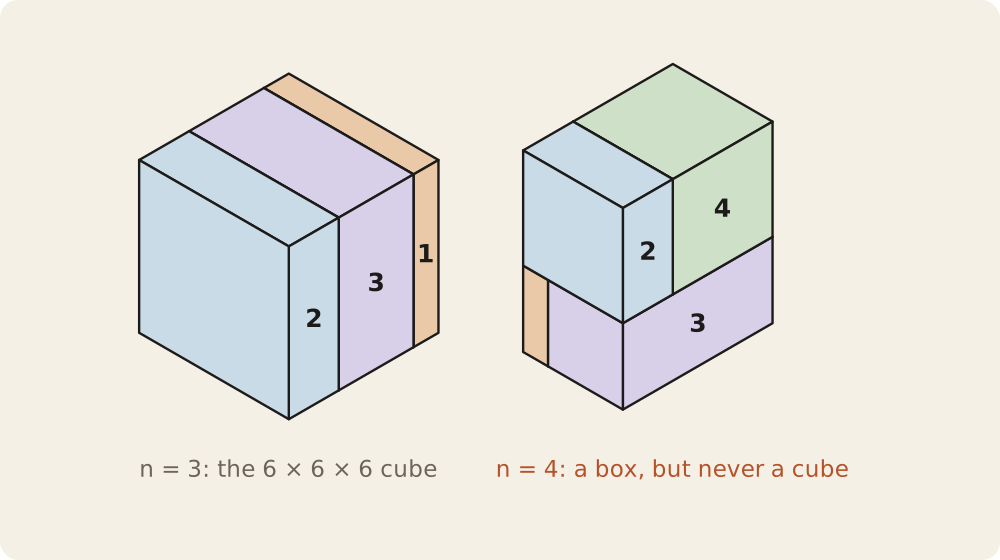
- Slab cubes (unsolved problem 6). A cube tiled by one
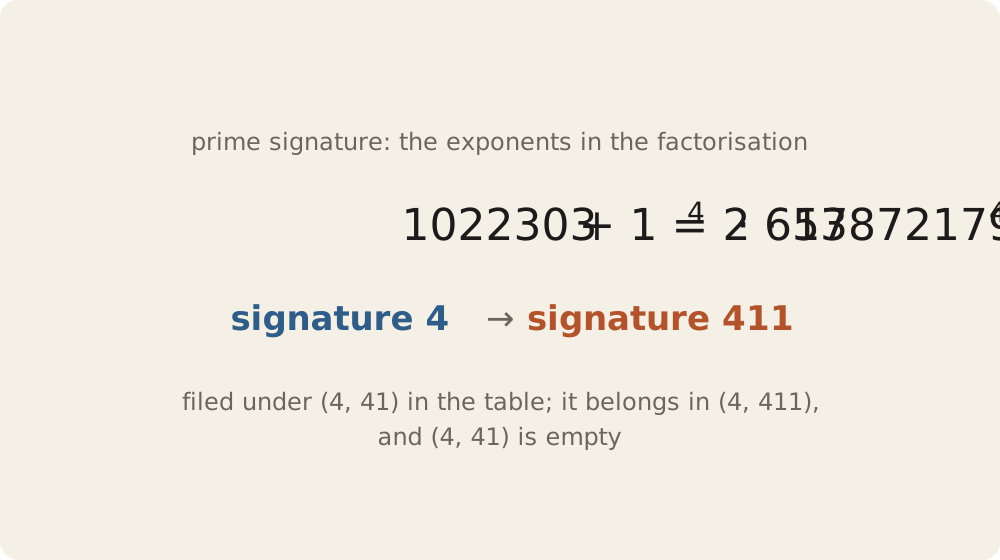
k-slab (ak × ik × jkbox) for eachk = 1, …, nhas side at mostn(n+1)/2, with equality only forn = 1, 3; no such cube exists forn = 4, 5, 6. The bound is proved; the non-existence is certified by two programs, one with a constraint solver and one without. - Prime signatures (unsolved problem 28). The table’s entry
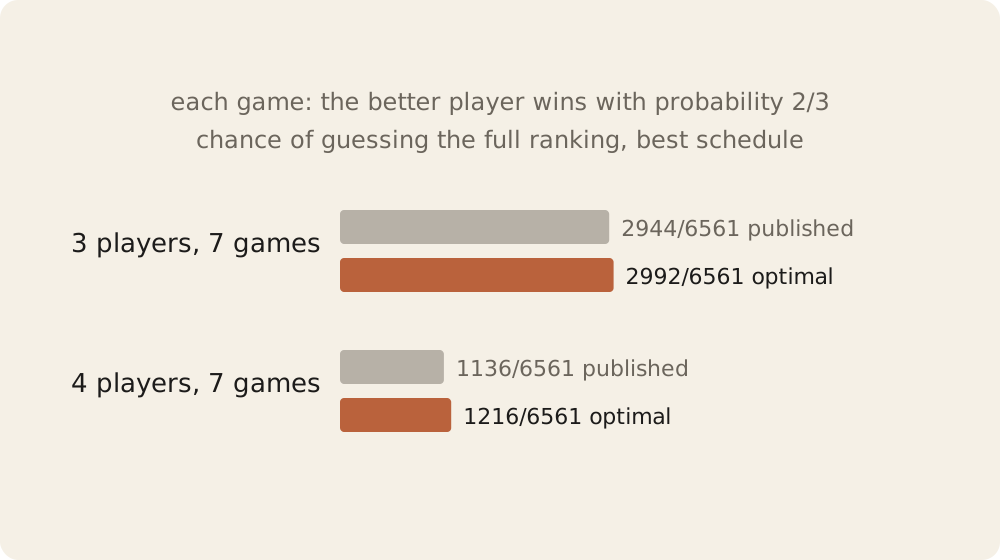
1022303⁴in cell(4,41)belongs in cell(4,411), where it is the smallest value (proved, using Ljunggren’s theorem onx² + 1 = 2y⁴); cell(4,41)is empty. The two open cases have no solution below10¹⁷. - Optimal tournaments (unsolved problem 33). Exact optima over all adaptive schedules: ranking 3 players in 7 games succeeds with probability
2992/6561(published2944/6561), 4 players in 7 games with1216/6561(published1136/6561); three entries for 5 players are corrected, and every other published value checked is optimal.
Preprint v2, 9 October 2026 (v1 the same day had the first four results), not peer reviewed. Some results are computer-certified and some proved by hand; the paper says which, and for each certified result what was computed, why it suffices, and how it was checked independently. No Lean formalisation: the certified results are exhaustive counts and solver refutations, checked by certificates and by programs written independently. The author used AI tools (Claude, Anthropic; Codex, OpenAI) in this work, as described in the paper, and is responsible for its content.